Search

K9 Musings

thoughts, opinions and stories from the dog side

Month

January 2016

You can’t control a partner

You can control your dog. Lots of people do. Control them with a leash, control them with corrections, control them through management. And control isn’t aways a bad thing – many times it’s very good and necessary!

But in order to move to the “partnership” level with your dog, you need to move beyond the control. You need to let them be free to make the choice, to use their senses, to respond to the training foundation that you have laid.

This takes time. Lots of time for some.

But the end result is a fluid partnership where your dog is able to bring something to the table that you cannot. Where the dog has self control and is able to make it’s own choices and respond to you without the pressure of repercussion if they make the wrong choice. They’re happy and confident in their work and you can trust that they’ll do the job to the best of their ability.

This is why I enjoyed stock work on the farm with my dogs. This is why I enjoy search and rescue work. I’m shaping a partner who I can work with. A partner who is able to use their innate senses in a team activity to accomplish something that I never could. They can maneuver in a muddy barnyard and keep the sheep from escaping. They can smell that missing person from 100 yards out and pinpoint their location.

In some activities, you never really have to relinquish control but can hover and correct. A sit that slides to a down? You can pull them back up by the collar. Dog in heel position wrong? Leash pops. But you can’t correct a dog into the best way of doing something where their ability is far superior to yours. You shape and build desire, you lay a foundation, you reward what you want, you stop what you don’t. But, in the end, you have to develop enough rapport where you are confident enough to let them do their thing. Without your intervention. Because you’re just going to mess things up.

Of course it’s very possible to train in sports and other pursuits without micromanaging and create a great working partnership. It’s a joy to watch, a thrill to experience and incredibly satisfying. But there’s something insanely cool about knowing your dog is contributing their instincts, where you lay the groundwork and then let them do their thing. And then you stand back and marvel at the way they precisely use their instincts to accomplish a task. You’re partners bringing your own strengths to the team. It’s not something you can force or demand. It’s something that you build based on mutual respect.

Train your dog, then trust them.
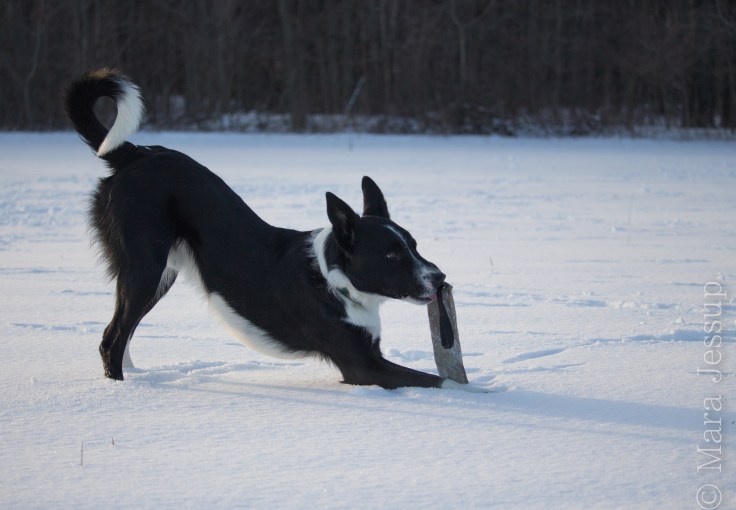
Today we played

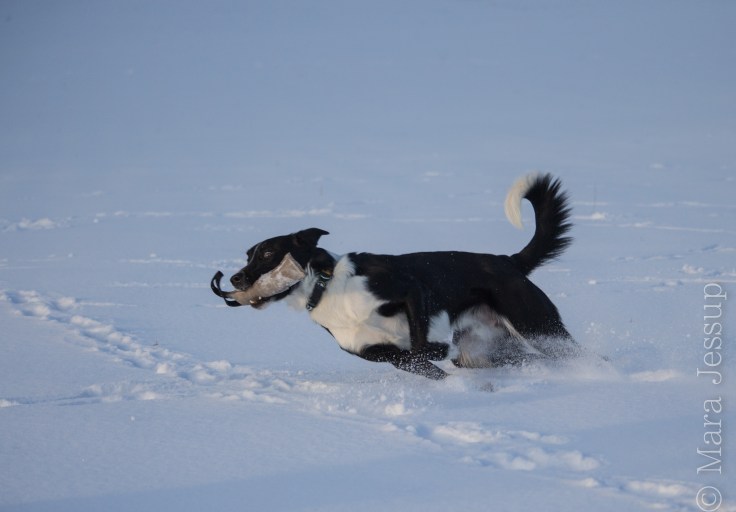
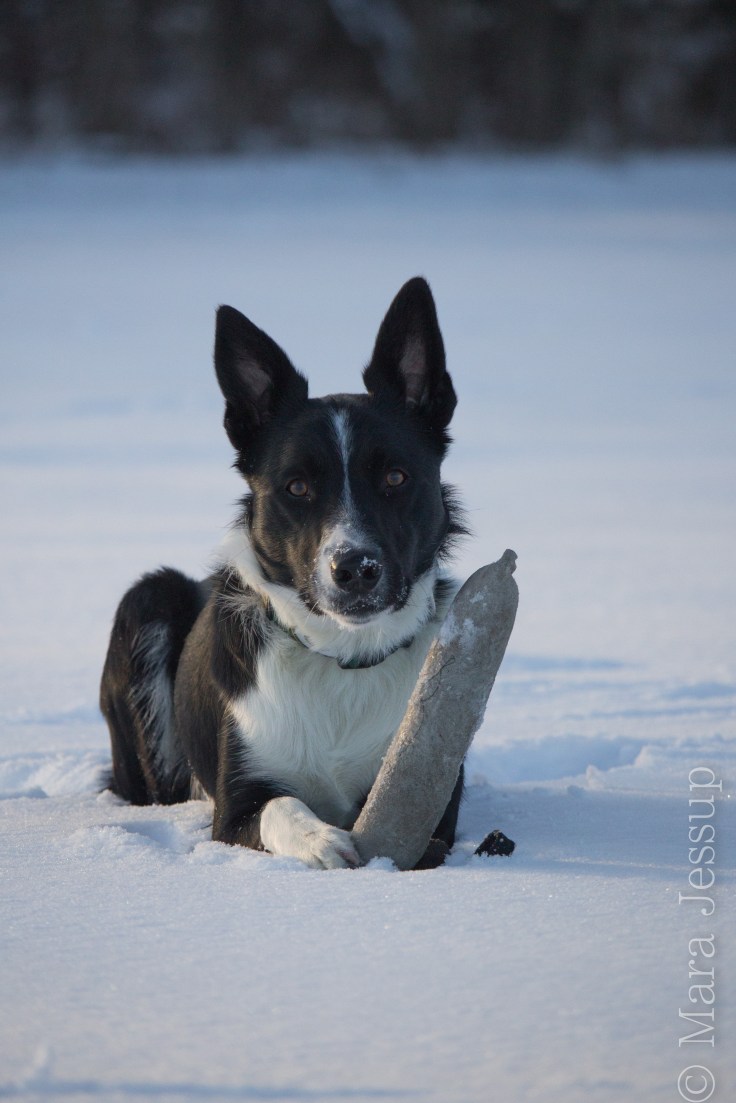
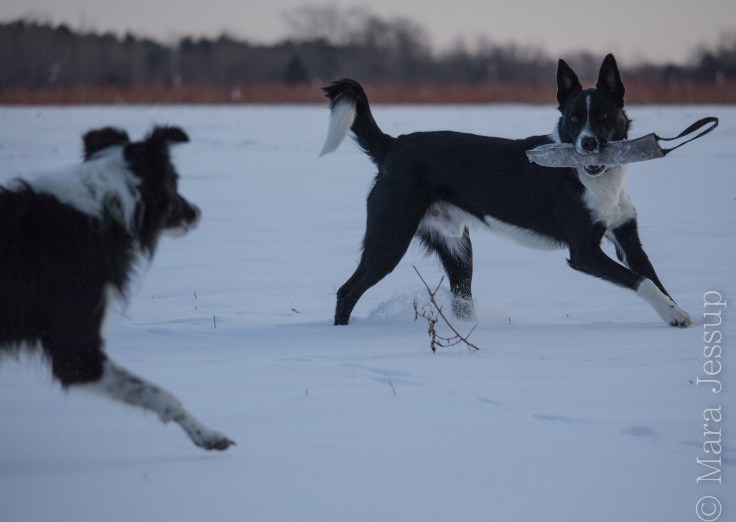
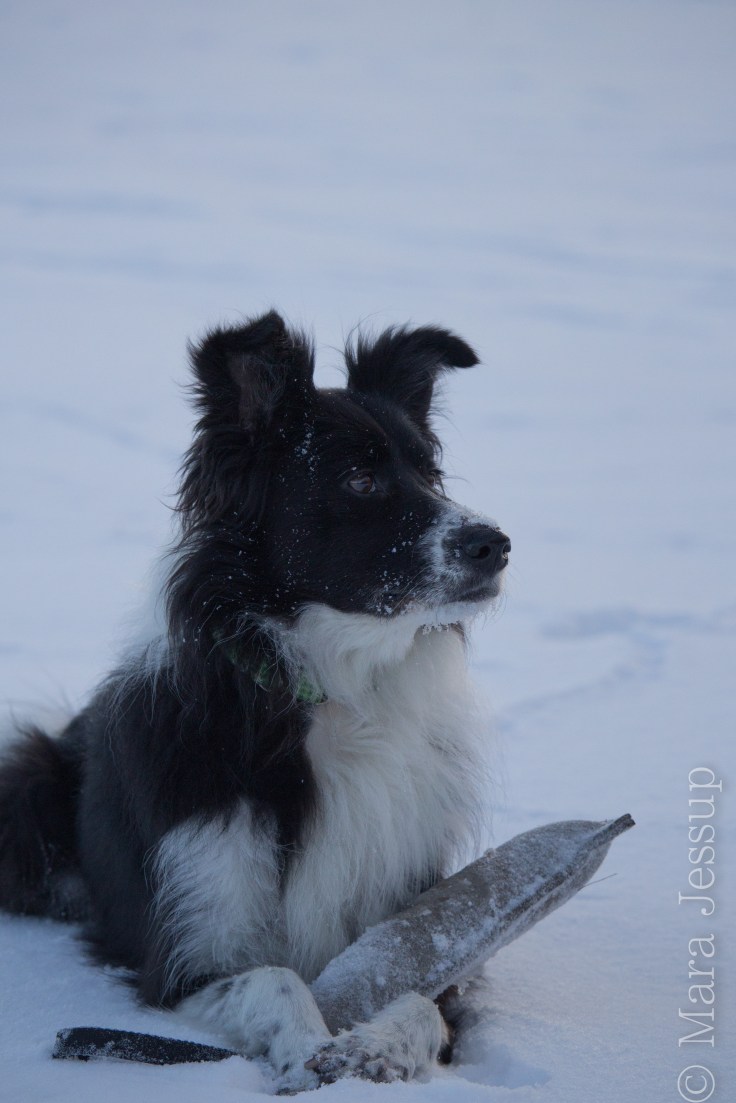
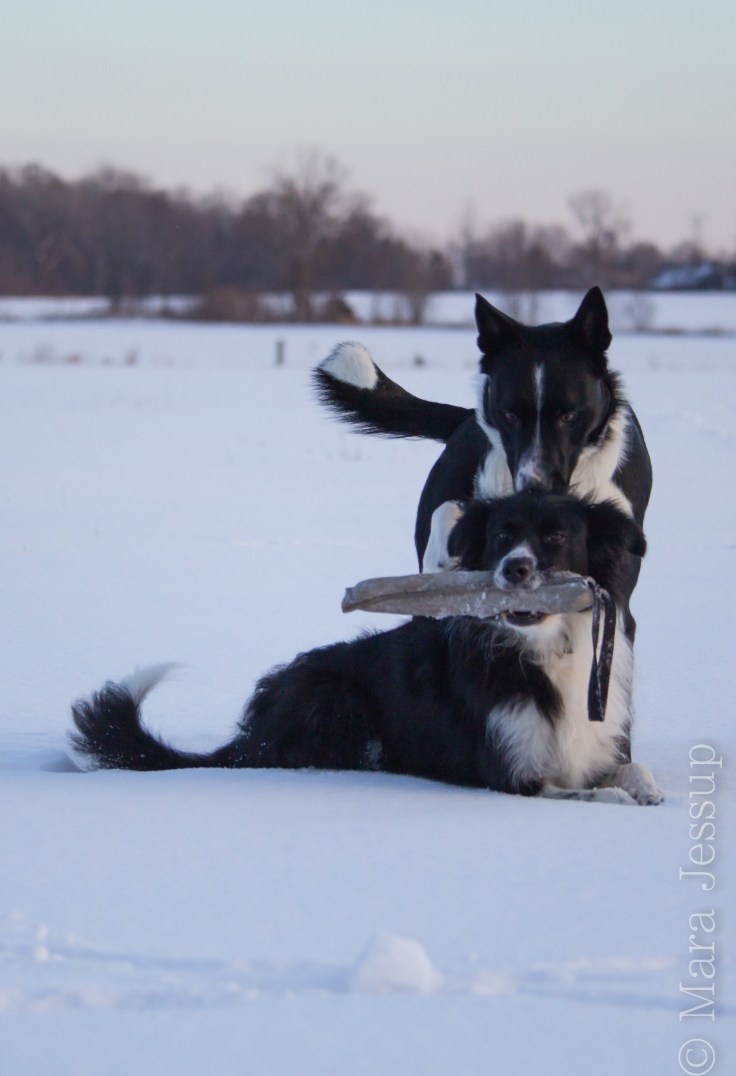
Or rather they played. And taunted each other. And I stood back ready to referee if needed and took pictures.

IMG_9444

  See – it’s MINE! I have it and you can’t get it!

IMG_9447

I can run faster and turn sharper than you. There’s no way you can get it!

IMG_9452

Who, me?? Taunt Kenzi? I’m just a sweet, innocent puppy who just wants to have fun.

IMG_9468

“Oh, Kenzi – Look what I have!!”

IMG_9475

Hey, Kid – you drop something??

IMG_9485

It’s all mine now.

I will eat you alive if you try to get it.

Ha – take that you little punk!


IMG_9500

He wants it. Badly. And is sooo not getting it back…

The Square Pegs

Missy was a “your wish is my command” dog

Kipp was a “I try to be good –  it’s kinda hard sometimes but I still try” dog

Kolt is a “what’s up next, partner?” dog

And then there’s Kenzi. She’s an “I want you to love me, but it’s complicated – I have an opinion and am a bit independent” dog.

She threw me for a loop more than once. Mostly due to her inconsistency. Or maybe it was my expectations that were unreal for her. She loved working with me and was brilliant. Except when she wanted to do her own thing. Unlike the other dogs, I couldn’t trust her or be confident of what behavior that I’d get next.

She’s a wilderness search dog. But I almost scratched her from training a few times. Because she’d come * this * close and then regress.

And then something changed. Not sure exactly what. Maybe it was pack dynamic shift. Maybe it was maturity (at about 5.5 years old). Maybe it was me.

I do know that I had finally just started letting her do her own thing.

Conventional wisdom says that a SAR dog needs to get fulfillment through the work and not be allowed to find fulfillment in the environment around them. And I don’t really disagree with that. When a dog is searching for a person, they NEED to be focused on the job and not conflicted by wanting to chase a squirrel etc. And she had years of drive building, shaping and correcting. She * knew * what she was supposed to do. But she still had wants.

When I got Kolt, I focused on him more and gave her more free rein do do her own thing around the farm. She hunted through the barns, chased squirrels, dug for woodchucks. And, lo and behold, with all of that out of her system she got better and better at SAR work. Focused, persistent, consistent.

It wasn’t supposed to happen that way. But, with the pressure gone and a bit of freedom to do her own thing, she started giving my 100% of her focus when it was time to work. Even more, she’d ignore every distraction in her pursuit of the “victim” at trainings. And, then with the victim found and the job over, her nose would be checking everything else out on the way back to the car.

And she passed her certification testing. But even more, I became confident in her work to the point where I was comfortable certifying her.

All this isn’t to say that you should take your working dog and just turn them loose to do their own thing hoping for the best. That’s usually a recipe for disaster. And not everyone has a situation where it’s fine for a dog to go exploring the barns while you do yard work or something. But it is to say that you need to recognize what your dog needs and treat them as an individual. Even if it’s not quite conventional.

Figure out if you can change that hole a bit and meet that square peg halfway.

A most important behavior

I’ve often heard stories of dogs who get their owners up like clockwork in the morning. The active dog who must get going and gets their owner up to go with them. Up every morning for a 5 mile run at 4 AM. Rain, shine or in the snow.

Those are not my dogs.

In fact, I consider it a training triumph that both dogs will often remain curled up and asleep despite the snooze button being pushed a couple times.

Because I am not a morning person. I start my days slowly and give myself about 20 minutes to get up after the alarm first goes off.

Kenzi is perfectly happy with this set up. In fact, after a quick trip outside in the morning she makes a beeline back to bed and snoozes for a few more hours. She’s obviously missed the “requirements for a high energy dog” memo and I’m just fine with that.

Kolt would love to get up. In fact, he’d love to bounce out of bed the minute the alarm goes off. But he likes a happy person better. He occasionally tries to paw the blankets off after the alarm goes off the first time. And he usually gets a sleepy, slightly irritated “Kolt, that’s enough!” for his trouble. Upon which he melts back into bed and tries to snuggle. With me. He has better sense than to try it with Kenzi as she can be even grumpier than the resident person when waking in the mornings. Despite his thoughts on the matter, he has pretty much learned to go with the flow and keep that gals happy.

This “sleeping in” behavior doesn’t happen overnight – for either dog. Training it takes persistence, consistency and time. Knowing that I’m training a behavior that is important can really helps justify pushing the snooze button a couple times in the morning – I’m not being lazy, I’m training my dogs from the comfort of my bed. And it’s wonderful!!! Especially at 8:30 on a Sunday morning.

* Disclaimer – your breed may differ. Which is why I’m probably going to be plenty happy sticking with Border Collies for a long time. As much as I’m intrigued by, say, a Malinios, I’d hate ending up with a dog who really must have that 4 AM run.

The Nirvana of Country Life

I live in the country. I love living in the country. I love stepping out the door and having an empty, quiet field to walk in. To let the dogs run free in as I walk. It’s good for me. It’s good for them. It’s one of my top stress relievers. Watching the dogs run and enjoy themselves always puts a huge smile on my face.

But it isn’t all sunshine and roses.

Because lots of wild animals also run free there. And poop. And die. Leaving gross stuff for the dogs to roll in.

Dogs love poop – almost as they love dead stuff. They love sticking their noses in it, they LOVE rolling in it. And it takes them all of 30 seconds to find that poop. So that means we can step out for a quick potty run and one of the dogs finds poop, drops, rolls it and needs a bath.

Did I mention that this is gross?

I have become an expert at giving “head baths” (which involve the front quarter of the dog). A bucket of warm water, some shampoo, a small tupperware container and a towel. These baths take place outside (because who wants that in the house). I can give them in about four minutes. All the while the dog is standing there with a “what did I do wrong?!?” look on their face.

If I’m lucky, they won’t shake off on me. I’m usually not lucky….

Country life – ain’t it grand?!?

I wouldn’t trade it for the world. Seriously.

IMG_9724


  • I take dog bedding to the laundromat so I don’t need to deal with the hair in my washer and dryer.
  • I work hard to put as much thought into my diet as I put into their diet.
  • We share workout equipment. Heck, they ARE my workout equipment sometimes. Of course this means that I can create a workout budget and funnel it into dog stuff.
  • My college psychology class made much more sense to me because I had previously heard many of the terms in a dog training context – good ol’ Pavlov and Skinner!
  • In that same vein, over half of my college English papers were on dog subjects. I like to think that this gave my teachers something fun and different to read.
  • I have roughly 12,000 pictures of my dogs on my computer. The 3,000 pictures are split between my knitting projects and family.
  • I throw the dogs bits of food from my plate on occasion. If they’re not bothering me then I’m happy to reward them.

Happy New Year!

In my quest to start off the new year with new adventures, Kolt and I visited Kal-Haven trail state park (Kenzi was home curled up the bed – not really a bad place to be when it’s a frigid 25 with a biting wind).

We set off in search of the covered bridge (or at least I did – Kolt just wanted to do something). For pictures of course! And just 2/3 of a mile in we reached it. It was a pretty cool walk – in more ways than one – and we had the trail to ourselves!

As an added bonus, the walk took us past a set of steps that also made for cool photo opportunities.

This is definitely going to be on the agenda again in the future!

Corrections in training

A hot topic for sure.

I come from a farming background, I’ve never competed in formal dog sports or disciplines, my dogs were first chore partners and then became SAR partners.

Because of this, and the happy bubble that I’ve lived in, I’ve never really seen the dark side of corrections in training. My dogs have been corrected, sure, but never to teach retreiveing an object, getting a perfect heel, or holding position during a stay. And never with ear pinches, hanging on a leash or a myriad of other punitive “training” measures.

Instead they’ve gotten corrected for chasing a cat, blowing off a necessary recall after they’d demonstrated a solid uderstanding of it, trying to grab something off a counter (if caught in the act), worrying farm animals. Basically a correction is used when I want to extinguish a behavior or a behavior is harmful to them or other animals. And the vast majority of the time it’s a verbal “knock it off”.

A “no” is used to communicate that I don’t want them to do something (pro tip – if you’ve developed a good communication system and a dog who wants to work for you, that basic “no” is a pretty meaningful word to them)

As I mentioned in my previous post, my ultimate goal is to train a partner. A partner who chooses do the job, a partner wants to do the job. A partner who won’t quit. Not because they *can’t* quit, but because the job – and working with me – is rewarding.


I’m not philosophically opposed to correcting a dog, I don’t think it’s something that needs to be totally removed from training. I do think that as you focus on creating desire and a partnership that you’ll find that training is more effective than punishing into compliance and the (much fewer) corrections that you do give will be milder but at the same time carry much more weight with your dog. Because they *want* to work with you, they *want* to make you happy. And that *want* is is pretty darn cool thing to experience.


.

Blog at WordPress.com.

Up ↑